Source Snapshot
- Origin: NVIDIA and Partners Showcase the Future of AI-Driven Manufacturing at Hannover Messe 2026
- Published: 2026-04-20
- Evidence level: Vendor ecosystem showcase with partner examples and projected outcomes
- One-line takeaway: NVIDIA is presenting manufacturing AI as a layered industrial operating stack: governed infrastructure, physics-grounded engineering, digital twins, vision agents, robot simulation, and safety-aware edge deployment.
Garden Card
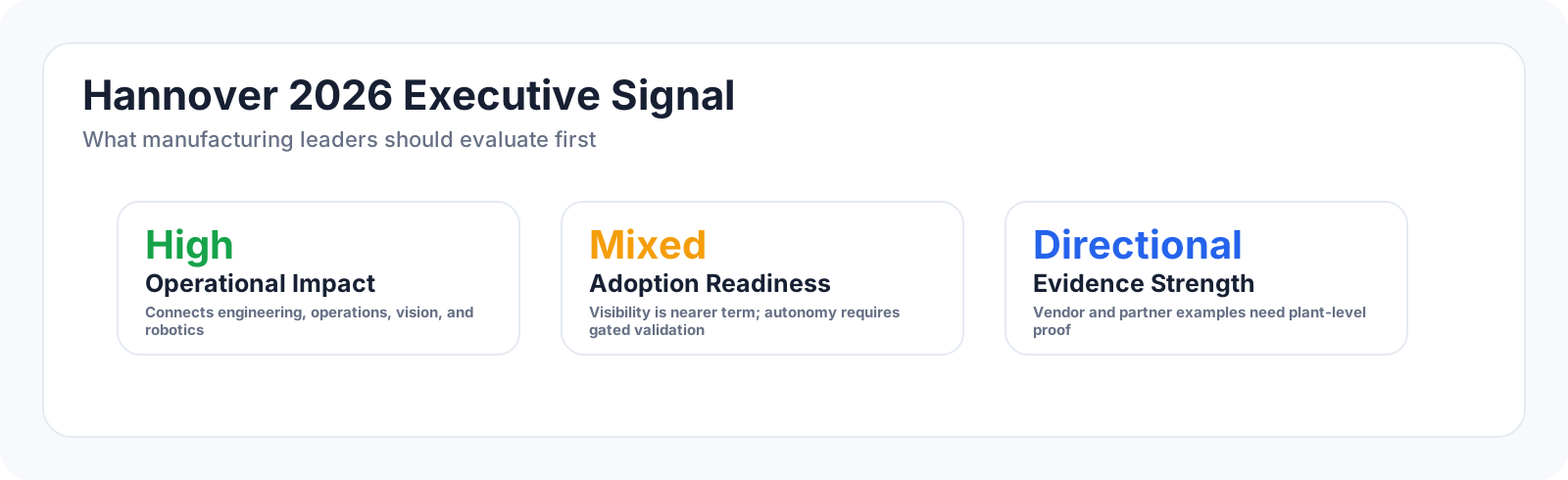
NVIDIA’s Hannover Messe 2026 message is best read as an industrial AI adoption map, not as a single product announcement. The useful signal for manufacturing leaders is the stack pattern: build governed compute and data foundations, connect engineering and factory digital twins, use vision agents for bounded decision support, and only then move toward physical autonomy where safety, rollback, and measurable operational outcomes are validated.
1. Executive Summary
NVIDIA’s showcase frames manufacturing AI as a platform architecture spanning accelerated infrastructure, AI physics, Omniverse digital twins, Metropolis vision agents, Cosmos and Nemotron models, Isaac robotics, and edge systems such as Jetson and IGX. The practical implication is that production value will come from connected workflows, not from isolated demos.
For enterprise manufacturers, the near-term opportunity is operational visibility and decision support: faster engineering simulation, searchable production timelines, root-cause assistance, quality inspection, safety monitoring, and simulation-first robot validation. The higher-risk frontier is autonomous physical action, where model confidence, functional safety, cybersecurity, operator trust, and deterministic fallback paths must be proven before scale.
The source is vendor-authored and should be treated as a strategic signal rather than an audited benchmark. Partner examples and projected gains are useful planning inputs, but each claim needs plant-level validation against real baselines, integration costs, production failure modes, and governance requirements.
Operating Context
The affected boundary is the manufacturing AI operating stack: cloud and edge infrastructure, engineering platforms, factory data, digital twins, vision systems, robotics, and production governance.
Decision Signal
Fund the data, simulation, integration, and governance layers before scaling autonomous physical action on the factory floor.
Readiness and Boundary
Infrastructure, simulation, and vision-intelligence workflows are closer to production use. Broad autonomous robotics remains workload-specific and must pass safety, latency, integration, and ROI validation.
2. Key Points
-
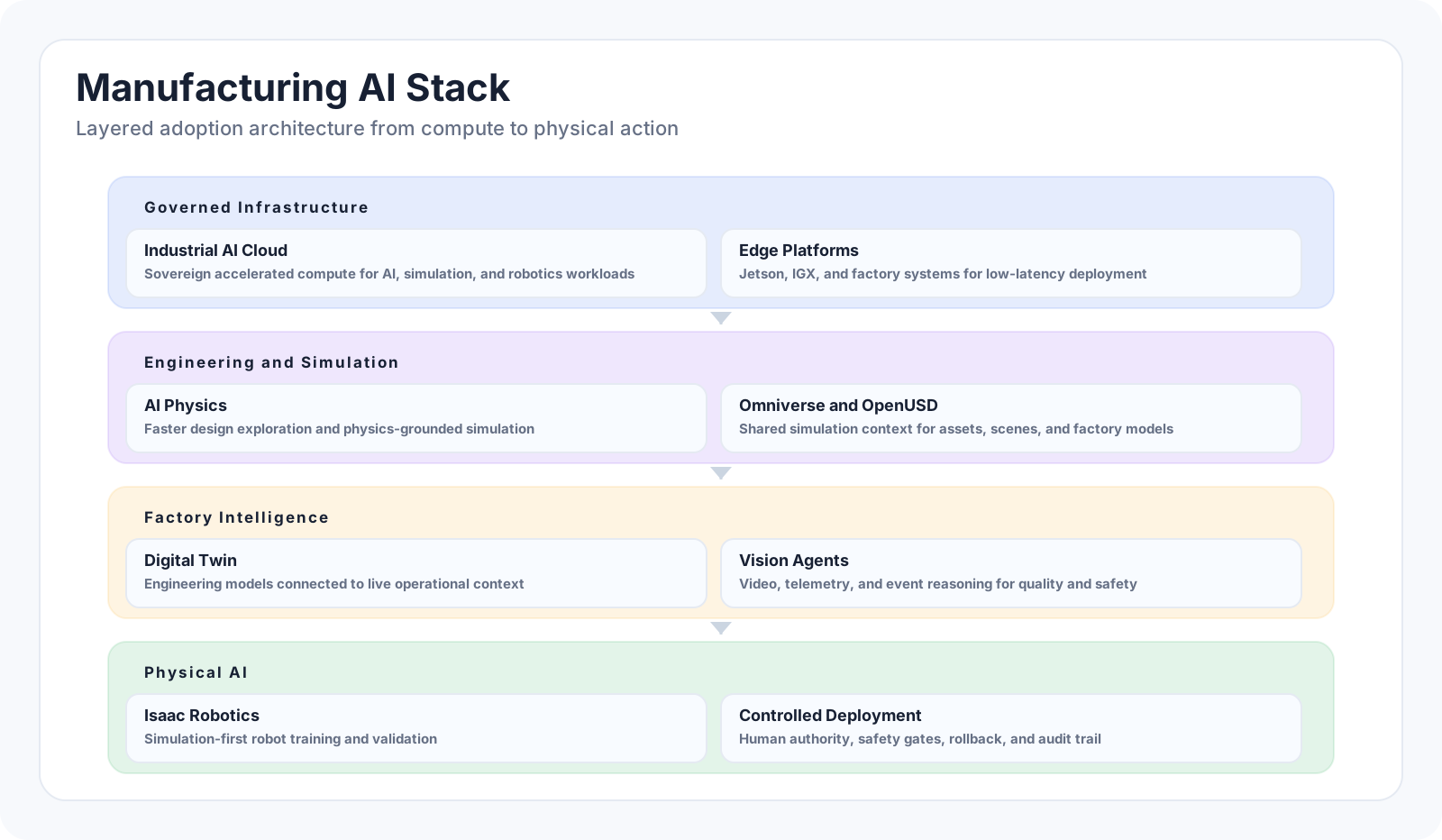
The core architecture is layered. NVIDIA is combining sovereign infrastructure, AI physics, digital twins, vision agents, robotics simulation, and edge deployment into a manufacturing AI stack.
-
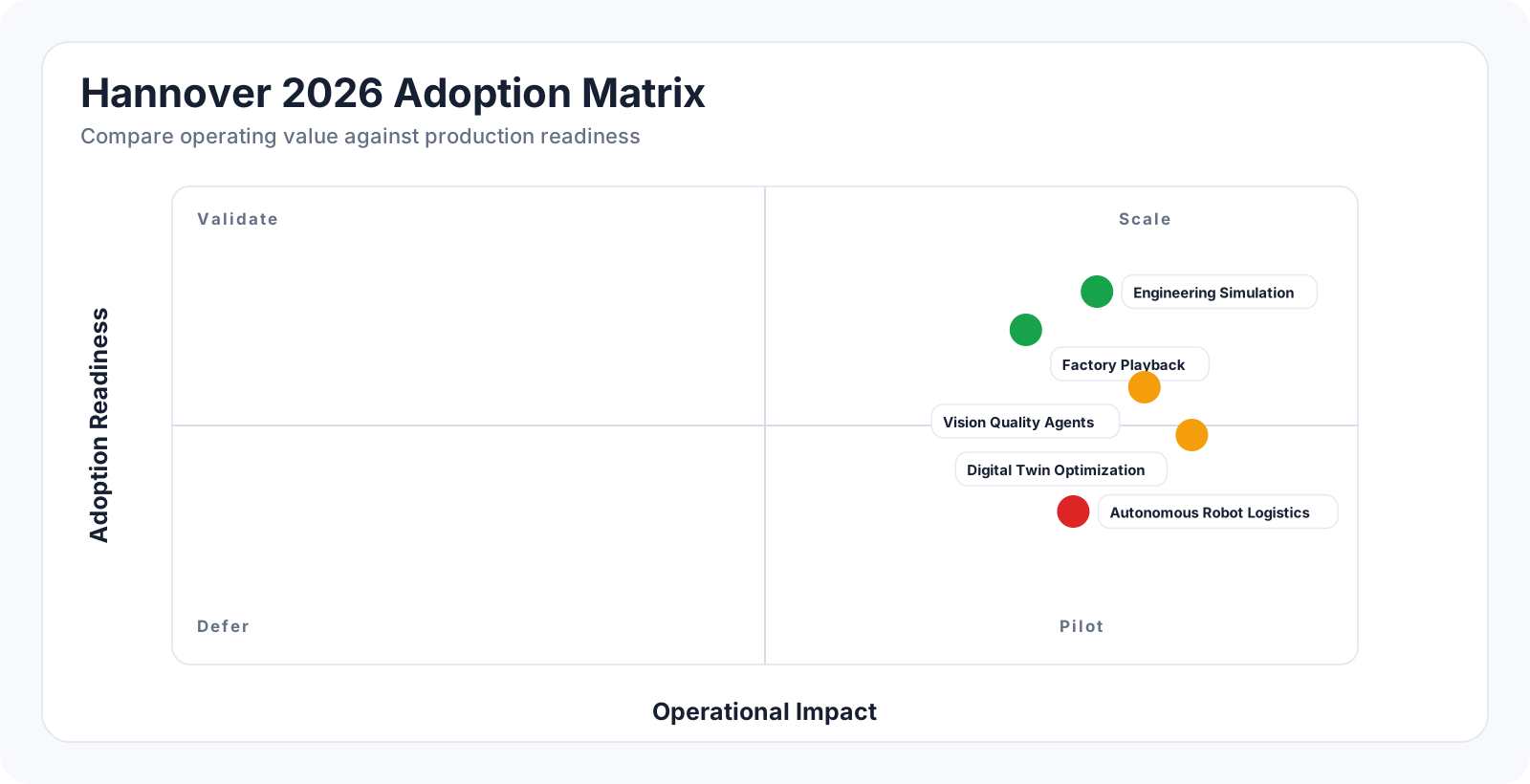
The near-term value is decision support, not full autonomy. Engineering simulation, operational playback, root-cause analysis, quality inspection, and safety monitoring are better starting points than direct autonomous control.
-
Digital twins become operational only when connected to live context. A factory twin must combine engineering models, spatial context, machine telemetry, production events, and workflow data before it can support production decisions.
-
Vision agents are an adoption bridge. Video intelligence can improve quality, safety, and cycle analysis without immediately changing machine behavior, but it still needs privacy, retention, false-alarm, and labor-governance controls.
-
Robotics is still a gated frontier. Simulation-first development can reduce development time and risk, but production deployment requires deterministic safety mechanisms, certified controls, fallback procedures, and human authority outside the generative model layer.
| Claim | Evidence signal | Confidence | Decision implication |
|---|---|---|---|
| Industrial AI should be managed as a stack | NVIDIA connects infrastructure, simulation, vision, robotics, and edge partners in one showcase | Medium | Plan architecture and governance across layers, not by isolated use case |
| Vision and playback are nearer-term opportunities | Tulip, Invisible AI, and related examples focus on production context and video intelligence | Medium | Start with visibility workflows before automated physical action |
| Robot autonomy requires staged validation | Humanoid and partner demonstrations are proof-of-concept or early deployment signals | Low to medium | Keep autonomy behind safety gates, simulation validation, and rollback controls |
| Sovereign AI infrastructure reduces data-control risk | Deutsche Telekom Industrial AI Cloud is positioned for European industrial workloads | Medium | Evaluate data residency and vendor concentration separately from model capability |
3. Key Technical Details
Manufacturing AI Stack Architecture
The showcase describes a stack in which each layer supports the next one. Accelerated and sovereign infrastructure hosts AI and simulation workloads. Engineering tools use CUDA-X, AI physics, Omniverse libraries, and Nemotron models to support design and simulation. Digital twins bring engineering and operational context into scenario testing. Vision agents interpret camera streams, machine telemetry, quality events, and operator workflows. Robotics platforms use simulation, synthetic data, and edge compute to validate behavior before bounded deployment.
Ecosystem Examples and Evidence Quality
The article gives concrete partner examples, but they are not equivalent to independently controlled benchmarks. ABB Genix, Kongsberg Digital, Microsoft, and Siemens are shown around Omniverse-based digital twin integration. Tulip Factory Playback is described as synchronizing telemetry, operator workflows, quality events, and video into a searchable operational timeline. Invisible AI, Fogsphere, and Tulip are positioned around Metropolis, Cosmos, and Nemotron components for production analysis and safety monitoring. Humanoid, SCHUNK, Hexagon Robotics, QNX, Siemens, and Wandelbots represent different pieces of the physical AI path from simulation to robot deployment.
The most actionable reading is to separate architecture evidence from outcome evidence. The architecture signal is strong: NVIDIA is making its industrial AI platform more coherent across compute, simulation, perception, and robotics. The outcome signal is weaker: projected yield gains, rework reductions, and development-time improvements must be validated against factory-specific baselines and deployment costs.
Adoption Priority Matrix
The adoption pattern should start where the cost of AI error is lower and the feedback loop is measurable. Engineering simulation and production visibility can produce value without immediately changing physical behavior. Vision agents and digital twins then create the operating context needed for bounded automation. Autonomous physical action should come later, after integration, safety, and operating ownership are proven.
Boundary Conditions
Digital twins only help when the model is current enough, detailed enough, and connected to validated interfaces. A visually convincing 3D model is not automatically decision-grade. Vision agents can fail through lighting changes, occlusion, camera placement, process drift, privacy constraints, and ambiguous operating context. Robotics raises the cost of error because an AI mistake can become unsafe motion, downtime, scrap, or incorrect material flow. Sovereign infrastructure improves data-control posture, but it does not remove integration risk, model governance work, cybersecurity exposure, or vendor concentration risk.
Deployment Path
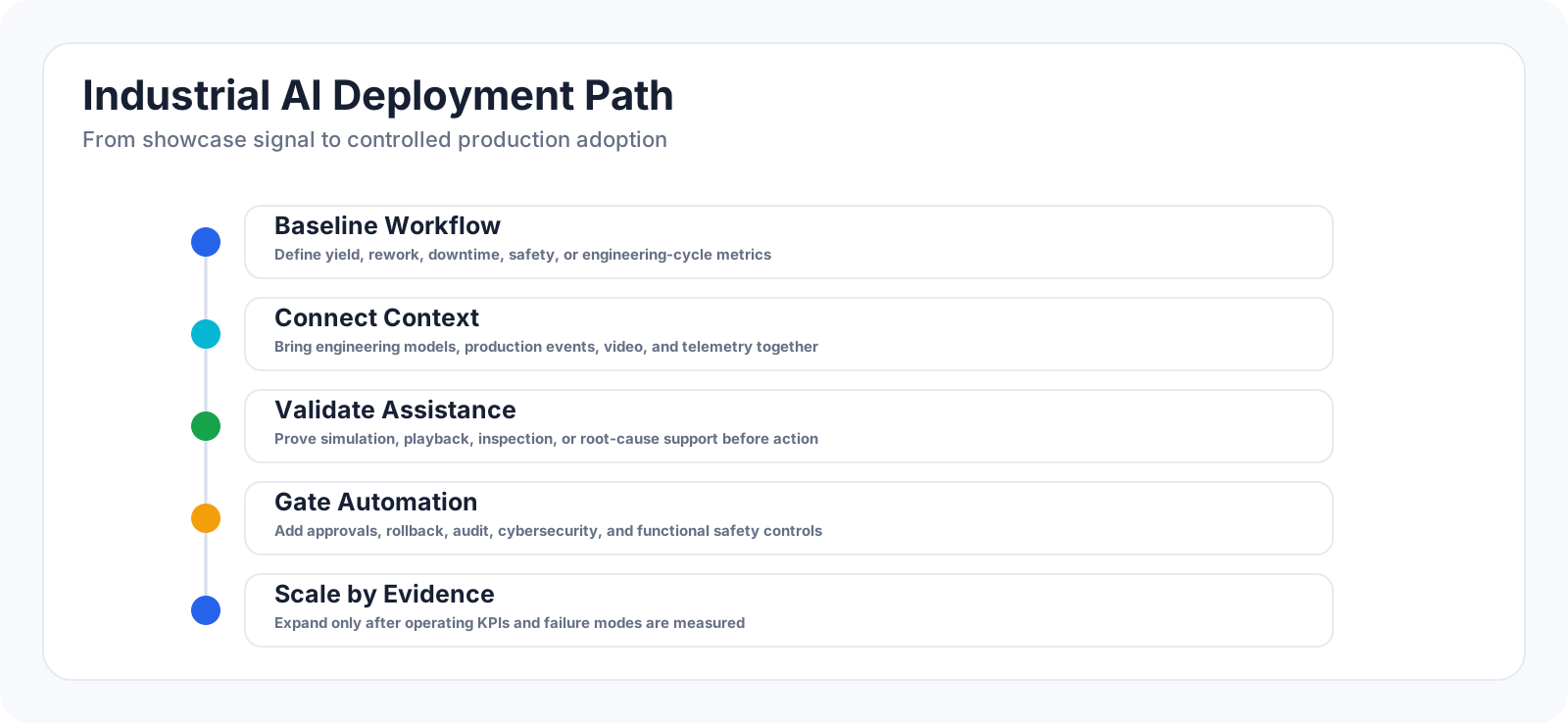
The safest operating path is staged. First, confirm business pain and measurable baselines. Second, connect data and simulation context without granting direct production authority. Third, use AI for recommendations, playback, inspection, and scenario review. Fourth, introduce bounded execution only where approvals, rollback, monitoring, and safety controls are explicit.
4. My Take
The value of this Hannover Messe signal is that it makes manufacturing AI look less like a robotics race and more like an operating architecture problem. The right question is not whether a factory can adopt every NVIDIA component; it is whether the plant has enough governed context to make AI decisions measurable, reversible, and safe.
- My priority: Start with infrastructure, data context, simulation validity, and vision-assisted decision workflows before granting any production authority.
- I would avoid: Treating humanoid or robot demonstrations as a business case without workflow baselines, safety validation, and total integration cost.
- Validation required: Independent ROI, failure-mode data, model governance, edge latency, operator acceptance, and plant-specific safety approval.
References
- NVIDIA Blog: AI-driven manufacturing at Hannover Messe 2026
- NVIDIA Omniverse
- NVIDIA Metropolis
- Microsoft Azure Physical AI Toolchain
- Physical AI & Industrial Manufacturing
- Manufacturing AI Agent Architecture and Readiness
- NVIDIA FOX Blueprint for Agentic MOM
- Hardware Architecture & Computing Infrastructure